The Tower of Hercules has warned ships approaching A Coruña for almost 2,000 years. Built by the Romans near the end of the first century CE, it is the world’s only surviving Roman lighthouse that still performs its original function. Its beam continues to mark an Atlantic coast of reefs, heavy seas and sudden fog.
The lighthouse stood beside the Roman settlement of Brigantium, at the northwestern edge of the empire. An inscription at its base names the architect Gaius Sevius Lupus, from Aeminium in present-day Coimbra, and dedicates the work to Mars. Fires burned at the top to guide vessels travelling along the Atlantic coast and into the natural harbour.
The tower rises from a rocky headland approximately 57 metres above the sea. Its Roman core is about 34 metres high. The masonry contains three levels of vaulted chambers arranged around a central structure. A ramp once climbed around the outside, allowing fuel to be carried to the light; the diagonal line of that ascent remains visible in the eighteenth-century façade.
By the late eighteenth century, the Roman structure needed substantial repair. Engineer Eustaquio Giannini enclosed it in the granite exterior seen today and added the upper section, bringing the tower to approximately 55 metres. The restoration protected the ancient building without hiding its internal plan, which visitors can still explore on the climb.
Hercules and Geryon
A medieval legend gave the Roman lighthouse its modern name. Hercules pursued the giant Geryon to this coast and defeated him after a struggle lasting three days. He buried Geryon’s head, ordered a tower to be built above it and founded a settlement nearby. A woman named Crunna became the city’s namesake.
The story appears in the thirteenth-century Estoria de España associated with Alfonso X. A Coruña later adopted the tower above Geryon’s skull for its coat of arms. The legend explains the city’s symbols; the surviving masonry, inscription and archaeological remains tell the Roman history.
Breogán’s tower
The same headland carries a second foundation story, this time looking north across the Atlantic. The medieval Irish Lebor Gabála Érenn, the Book of the Taking of Ireland, tells of Breogán, a powerful king who founded Brigantia and built a great tower in Iberia. From its top, his son Íth saw a distant green island and sailed towards it.
Íth was killed after reaching Ireland. Breogán’s descendants, the Milesians, later sailed there, defeated the Tuatha Dé Danann and became the legendary ancestors of the Irish people. The medieval text belongs to a tradition that wove biblical chronology, classical geography and Irish origin stories together. It names Brigantia, and generations of Galician writers identified that place with A Coruña.
Breogán became an important figure in the nineteenth-century Galician cultural revival. Eduardo Pondal called Galicia the nation of Breogán in the poem that became the words of the Galician anthem. A monumental statue of the king now stands near the lighthouse, holding a shield and facing the sea. From there, the Irish story feels rooted in the landscape: a high Atlantic tower, a harbour below and an ocean route running north.
The archaeological record also shows that Atlantic Europe was connected by seaborne trade long before the Middle Ages. Galicia, Brittany, Britain and Ireland exchanged objects and ideas across the water. The Breogán story is a legend, yet its enduring appeal comes from a real maritime geography shared by these coasts.
Visiting the tower
Reserve a timed ticket through the official online booking system, particularly in summer and at weekends. Tickets are also sold at the Visitor Information and Assistance Centre beside the tower from 9:45 am, subject to the remaining capacity. Entry is organized in half-hour slots, with a maximum of 32 people in each slot. Monday admission is free, but visitors still need a ticket.
Normal opening hours are:
- 16 September to 15 June: daily from 10 am to 5 pm; the last ticket is at 3:45 pm.
- 16 June to 15 September: daily from 10 am to 9 pm; the last ticket is at 7:45 pm.
- The tower closes on 24, 25 and 31 December, 1 and 6 January, and on the afternoon of 5 January.
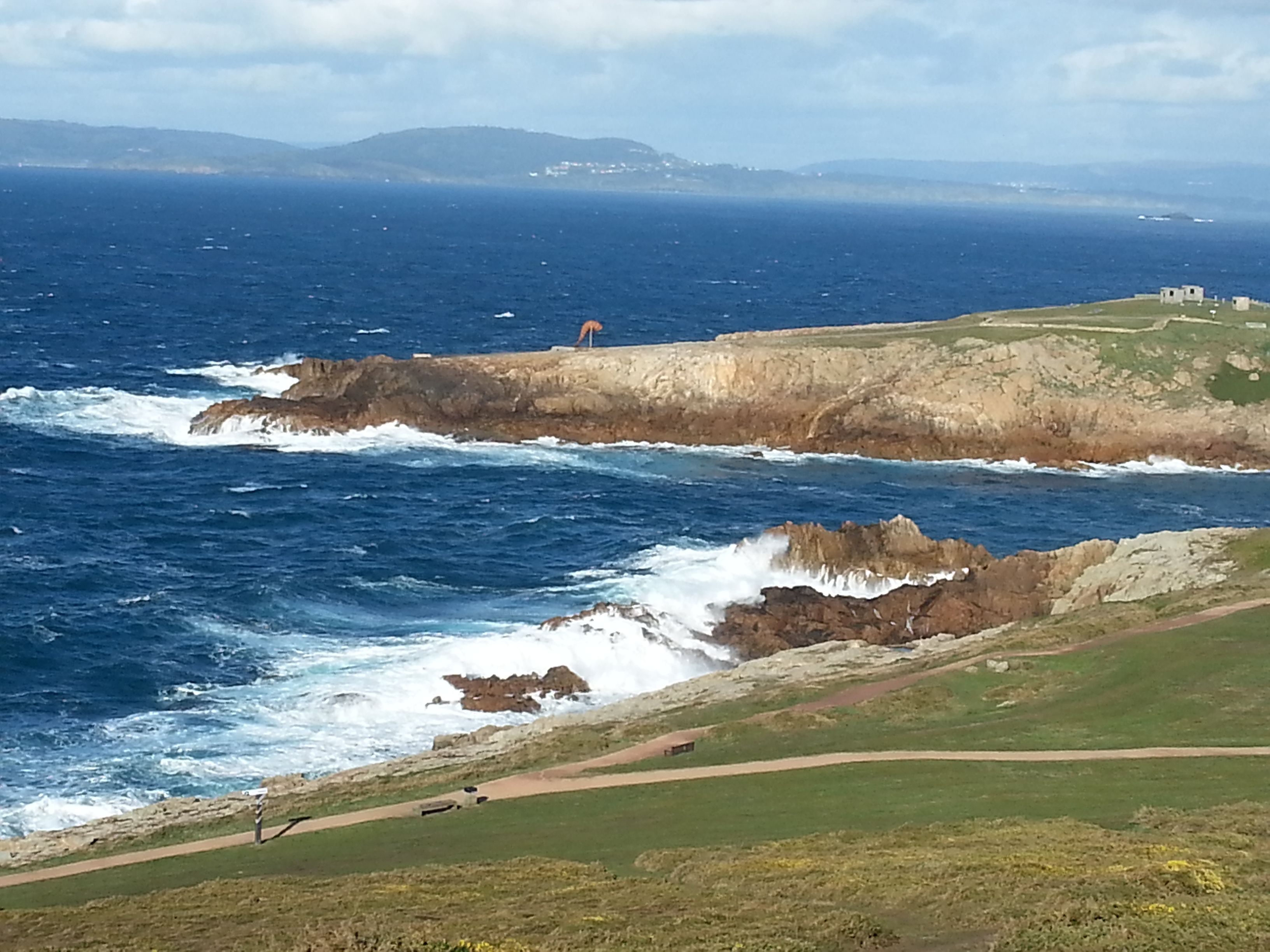
Allow time outside as well as for the climb. The archaeological park includes the foundations of the Roman building, rock carvings, coastal paths and sculptures connected with the sea and the two legends. The view from the headland takes in A Coruña, the entrance to its harbour and a wide sweep of Atlantic coast.
Why wind can close the tower
The Tower of Hercules stands fully exposed on a high promontory, where Atlantic weather reaches it before meeting any shelter. Strong gusts make the upper terrace dangerous and can also affect the entrance and paths around the monument. The terrace closes when the wind exceeds force 5 on the Beaufort scale, and the entire tower closes at force 7 or above.
These closures can happen even when the city centre feels manageable. Check the official visitor information on the day of your visit. If the interior is closed, the headland, sculpture park and views from the surrounding paths still make the journey worthwhile when conditions allow.
A Coruña is the traditional starting point of one branch of the English Way. We can add the Tower of Hercules before a tailored Camino or include it in a private Galicia itinerary from Santiago.