Vegetarian and vegan travelers can eat well on the Camino, but the choice changes sharply between Santiago or Porto and a small village with one dining room. Tell us when you enquire, not after the hotels have been confirmed. We pass the information to the properties and restaurants included in your journey.
We also ask for a short list of dishes and ingredients you actually enjoy. “Vegan” tells a kitchen what to exclude; it does not tell the cook whether you like lentils, mushrooms, tofu, rice, beans or vegetable stews. A few concrete preferences help a rural restaurant prepare something thoughtful and avoid the repetitive soup-and-salad combination.
Spanish words worth knowing
- Soy vegetariana / vegetariano: I am vegetarian.
- Soy vegana / vegano: I am vegan.
- No como carne ni pescado: I do not eat meat or fish.
- ¿Lleva caldo de carne?: Does it contain meat stock?
- ¿Lleva atún, jamón o huevo?: Does it contain tuna, ham or egg?
- Sin productos de origen animal: Without animal products.
The clarification about tuna and ham is useful. An ensalada mixta often arrives with tuna and egg, while a vegetable soup may use chicken or pork stock. Removing visible ham does not make the original dish vegetarian.
A vegetable sandwich can also contain tuna, sliced ham or egg. In many Spanish cafés, vegetal describes the lettuce, tomato and mayonnaise rather than a strictly vegetarian recipe. Ask for un bocadillo vegetal sin atún, sin jamón y sin huevo, or name the fillings you want: cheese, roasted peppers, tomato, tortilla or grilled vegetables.
Vegetarian meals to look for
There is far more available than salad. Depending on the region and kitchen, look for:
- Tortilla española: potato and onion omelette, usually served by the slice in cafés.
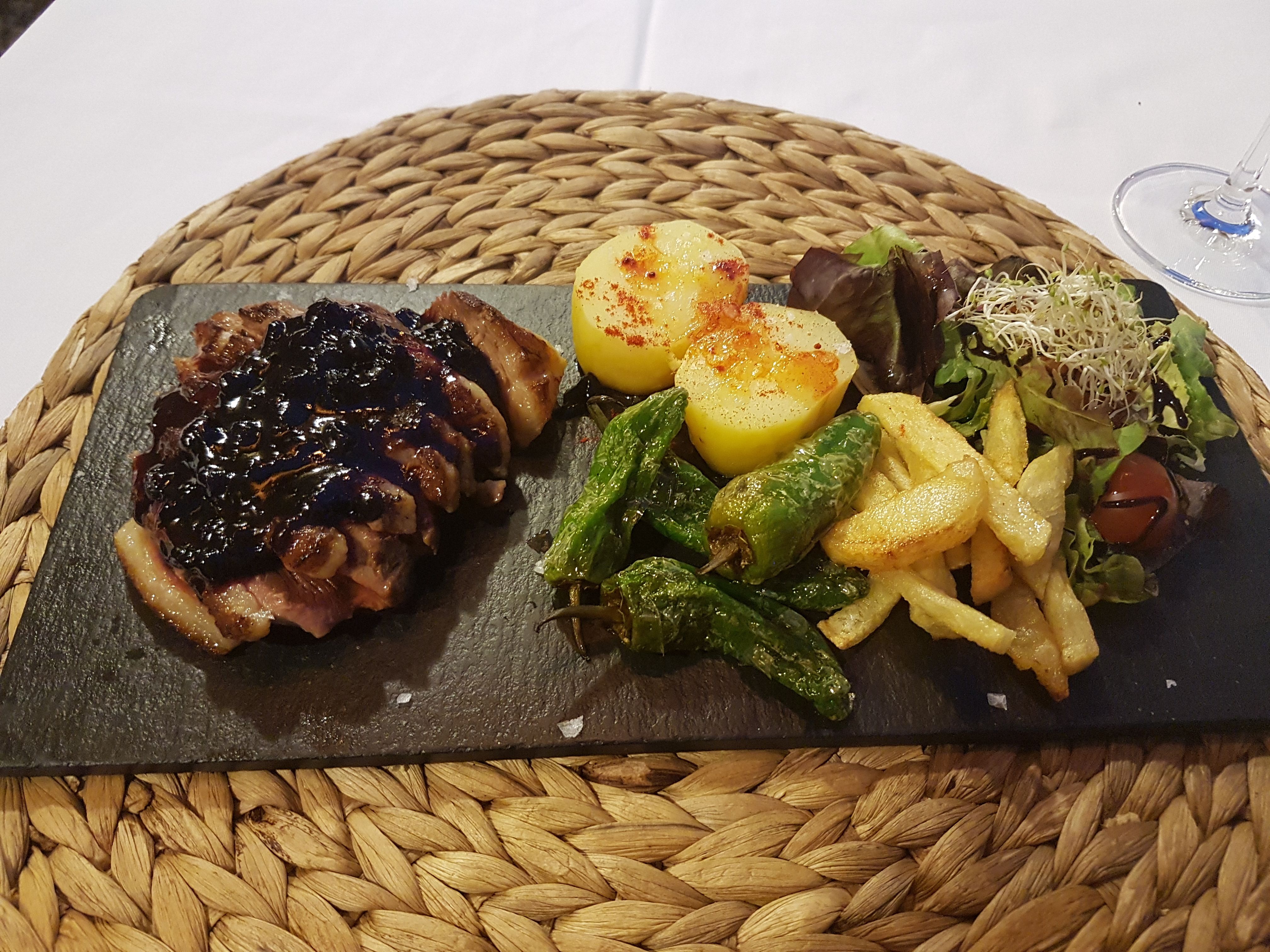
- Pimientos de Padrón: small fried green peppers with sea salt.
- Verduras a la plancha: grilled zucchini, eggplant, peppers, asparagus and mushrooms.
- Parrillada de verduras: a larger mixed plate of grilled vegetables, useful as a main course.
- Setas al ajillo: mushrooms cooked with garlic and olive oil.
- Patatas bravas: fried potatoes with spicy tomato sauce; vegans should ask whether the second sauce contains mayonnaise.
- Pan con tomate: toasted bread rubbed with tomato and olive oil, common for breakfast and a useful light meal.
- Gazpacho or salmorejo: cold tomato soups found in warmer months. Salmorejo commonly comes with egg and ham, which can be omitted when ordered.
- Lentejas or alubias: lentil and bean dishes can be excellent, though traditional versions often contain chorizo, pork or meat stock. Ask before ordering.
- Arroz con verduras: vegetable rice, sometimes prepared for two people.
- Pasta with tomato or vegetables: widely available in Camino towns and easy for a kitchen to adapt.
- Vegetable paella: more common in cities and tourist towns and normally prepared for a minimum of two people.
- Empanada de verduras: Galician pie filled with vegetables. Check whether the filling includes tuna and whether the pastry contains lard.
- Caldo or crema de verduras: vegetable soup or purée. Ask about meat stock, butter and cream.
- Goat cheese salad: often served with walnuts, apple, roasted vegetables or honey.
- Cheese board: a good vegetarian option in Galicia, León and Asturias, paired with bread, quince paste or salad.
- Eggs with potatoes and peppers: simple, filling and available in many village restaurants even when it is absent from the menu.
- Vegetarian pizza, tacos, falafel, hummus and vegetable burgers: increasingly easy to find in larger Camino towns.
Vegans need to ask about egg, dairy and stock. Croquettes contain milk and usually egg; many vegetable purées are finished with cream; pastry may contain butter or lard. A restaurant with a vegetarian menu may still have only one fully vegan main course, so booking ahead is worthwhile.
In Portugal, vegetable soup is common, but it may be made with meat stock. Useful phrases are sou vegetariana/vegetariano, sou vegana/vegano and sem carne, peixe, ovos ou lacticínios.
Portuguese options include vegetable soup, rice with beans, grilled vegetables, mushroom dishes, salads with pulses, vegetable petiscos and increasingly good plant-based versions of traditional dishes in Porto. Ask whether caldo verde contains chouriço and whether beans or rice were cooked with meat.
Vegetarian restaurants in major Camino towns
These restaurants provide reliable vegetarian or vegan choices in several of the principal cities. Reserve for dinner and call before making a special journey, as opening days can change.
- Pamplona — Restaurante Vegetariano Sarasate: Calle San Nicolás 19–21, 1st floor, 31001 Pamplona. +34 948 225 727. A long-established vegetarian restaurant with vegan menus.
- Burgos — Gaia: Calle Fernán González 37, 09003 Burgos. +34 947 279 728. Vegetarian restaurant near the cathedral, with vegan and gluten-free options.
- León — Restaurante La Unión: Calle Flórez de Lemos 3, 24004 León. +34 987 261 710. Vegetarian cooking with vegan choices and a daily menu.
- Ponferrada — La Marmita Verde: Avenida de Molinaseca 19, 24401 Ponferrada. +34 650 035 558. Fully vegan cooking, including bowls, pasta, tempeh and plant-based burgers.
- Pontevedra — Rincón Mexicano: Rúa Nova de Arriba 9, 36002 Pontevedra. +34 986 845 251. The menu can be adapted for vegetarians and vegans, making it useful for mixed groups.
- Santiago de Compostela — A Porta Verde: Rúa do Hospitaliño 18, 15704 Santiago de Compostela. +34 653 387 673. Vegetarian and vegan restaurant close to the historic centre.
- Porto — Manna: Rua da Conceição 60, 4050-213 Porto. +351 916 285 608. Vegetarian and vegan breakfasts and lunches in the historic centre.
Breakfast and the walking day
Hotel breakfasts usually provide bread, fruit, cereal and plant milk where it has been requested. Carry a small reserve for remote stages: nuts, dried fruit, a sandwich or a bar whose ingredients you have checked. Shops in villages can close at lunchtime and on Sundays.
If dinner is included in your Ultreya Tours itinerary, send us your dietary information well before arrival. We pass it to the hotels and restaurants and can request a proper vegetarian or vegan meal in advance. When dinner is independent, our journey notes can point you towards suitable restaurants in the larger towns. A rural kitchen may have no printed vegan menu, yet can often prepare an excellent meal with notice.