The Vía de la Plata is the great southern Camino corridor from Seville. It runs north through Extremadura and Castile and León. Near Zamora, pilgrims may turn northwest onto the Sanabrés Way toward Ourense, while others continue to Astorga and join the French Way.
It is a journey across the vertical spine of western Spain: orange trees and dehesa pasture in Andalucía, Roman cities in Extremadura, oak country, broad plains and the monumental sandstone of Salamanca and Zamora. Its scale is part of the attraction. The complete route is measured in many weeks, and long horizons create a solitude unlike the village-to-village sociability of the French Way.
The Roman road
This Camino has the clearest Roman identity of the principal routes. The ancient road connected Emerita Augusta, modern Mérida, with Asturica Augusta, modern Astorga. Milestones, bridges, arches and long engineered alignments still make the Roman network visible.
The popular English name “Silver Way” can mislead. The traditional explanation connects plata with an Arabic term for a broad paved road, although the corridor later did carry American silver arriving through Seville. Its importance continued after Rome through livestock movement, trade and military campaigns.
Rome developed the road in stages to connect the provincial capital at Mérida with military and mining centers to the north. Surviving milestones still give distances and emperors’ names; bridges cross rivers on arches engineered for endurance. The Camino sometimes follows this ancient alignment closely and elsewhere uses parallel tracks or modern roads.
The corridor later overlapped with cañadas reales, the great livestock roads used for seasonal movement of sheep. Roman engineering, Islamic geography, Christian pilgrimage and transhumance therefore occupy the same broad landscape without being one identical route.
When it became a pilgrimage road
Pilgrims from Andalucía and Extremadura increasingly used the route after the Christian conquests of Córdoba and Seville in the thirteenth century. The corridor also carries an earlier, darker Santiago story: Almanzor’s army travelled north for the attack on Compostela in 997. Tradition says the Cathedral bells taken to Córdoba returned north after the city fell in 1236.
The official Galician history names Gonzalo Fernández de Córdoba, the Great Captain, as a pilgrim fulfilling a vow. It also records Toribio de Mogrovejo, later Archbishop of Lima and a canonized saint, among the route’s notable travelers.
Seville, Mérida, Cáceres and Salamanca
Seville supplies a magnificent southern beginning. Its cathedral occupies the site of the Almohad mosque, whose minaret survives as the Giralda, while the Alcázar brings Islamic and Christian palace architecture into the same visit. The route leaves the city toward Italica and continues through a landscape of olives, cork oaks and grazing Iberian pigs.
At Zafra, whitewashed streets and noble courtyards introduce Extremadura’s market towns. The path reaches Mérida, founded in 25 BC as Emerita Augusta. Its theater, amphitheater, aqueducts, temple, circus and long Roman bridge justify an extra night; few Caminos pass through an archaeological ensemble of comparable scale.
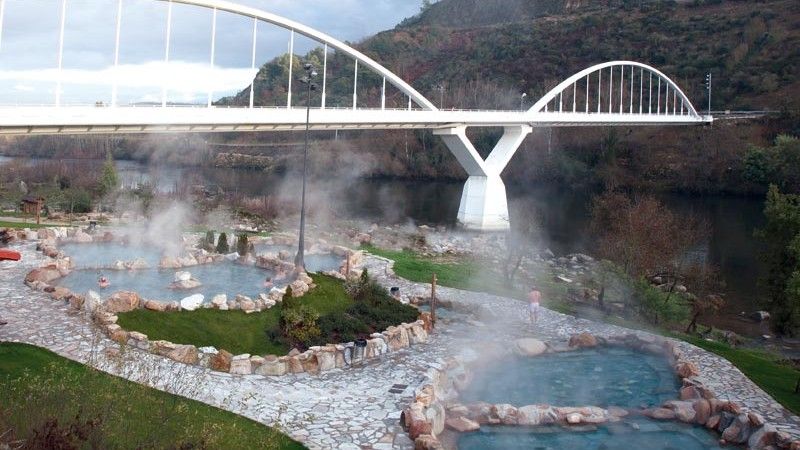
Cáceres preserves a walled center of towers, palaces and narrow lanes shaped by Roman, Islamic, medieval and Renaissance periods. Northward, the route crosses the Tagus and reaches the monumental Roman arch at Cáparra, standing alone over the ancient road. Nearby thermal Baños de Montemayor continues a bathing tradition linked to Roman waters.
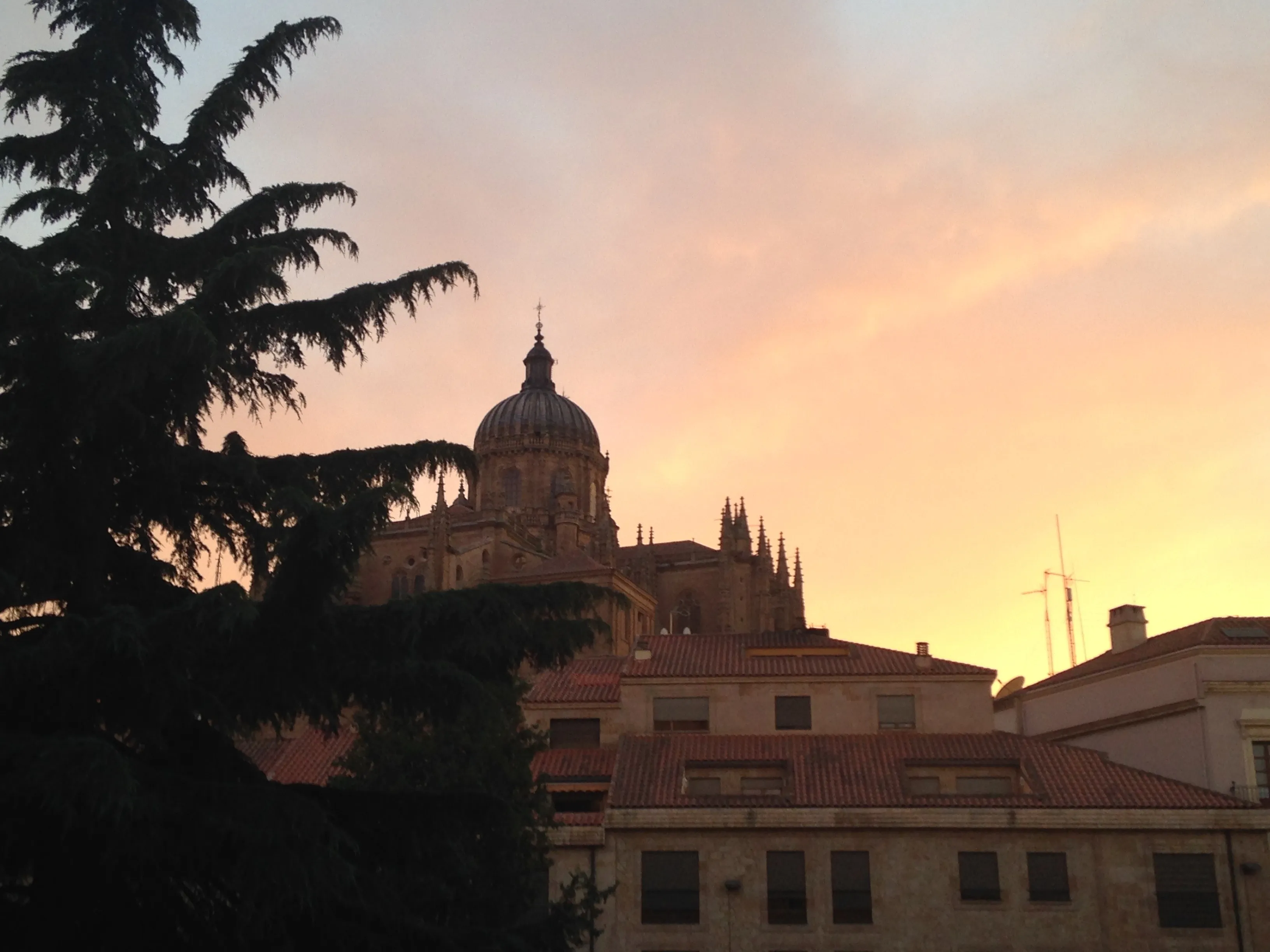
The climb through Béjar enters Castile and León before Salamanca, where two cathedrals, a golden sandstone Plaza Mayor and one of Europe’s oldest universities create another essential rest day. The university’s carved Plateresque façade and the shell-covered Casa de las Conchas show a city built around scholarship, church and noble patronage.
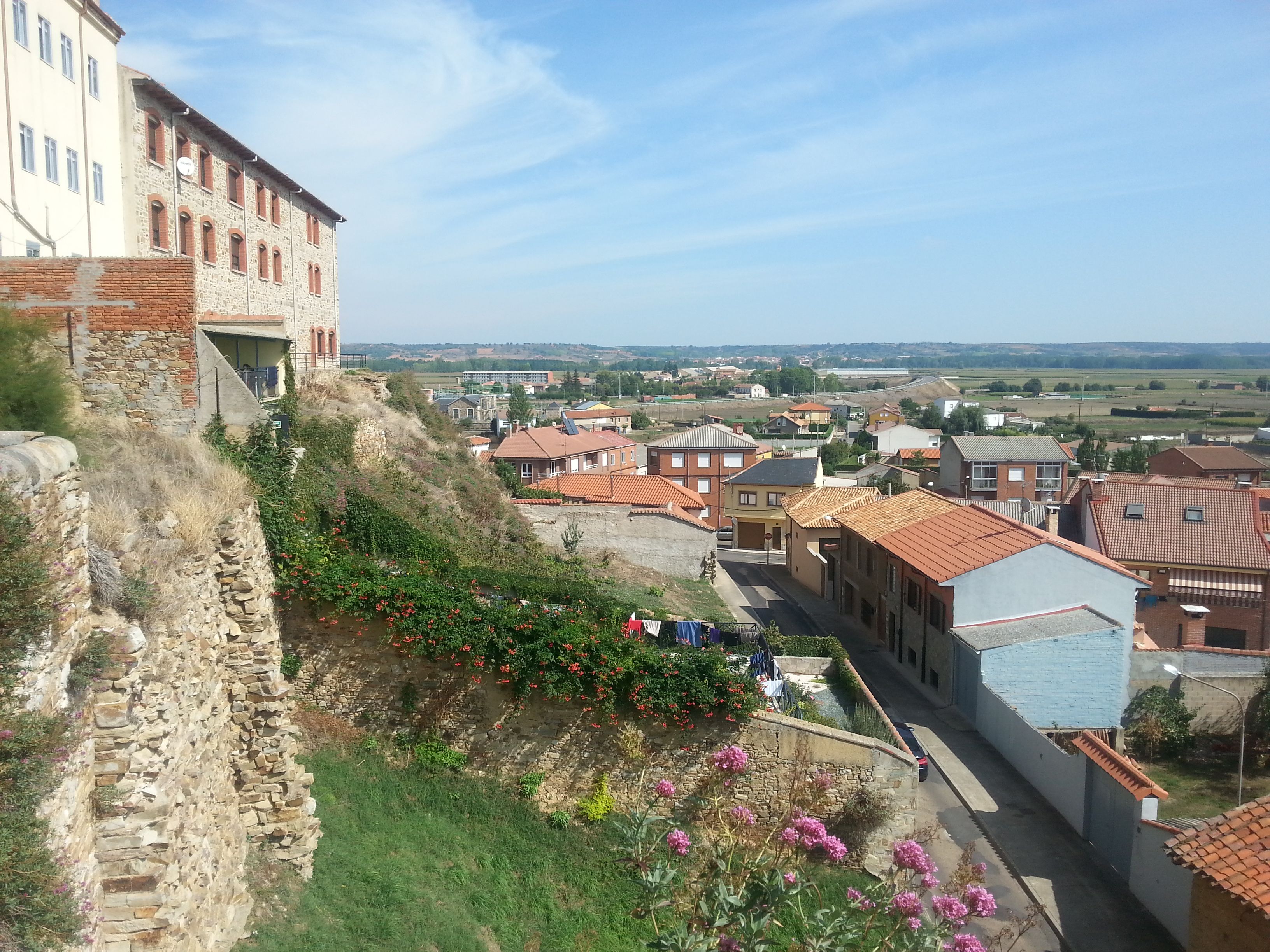
Zamora overlooks the Duero with an exceptional group of Romanesque churches and a compact cathedral crowned by a ribbed dome. Here the Camino decision becomes practical. Continue north through Benavente to Astorga and join the French Way, or turn northwest near Granja de Moreruela onto the Sanabrés Way through Puebla de Sanabria and Ourense.
How the southern routes connect
The Vía de la Plata is sometimes confused with the Camino Mozárabe and the Sanabrés. Mozárabe routes begin in cities such as Almería, Granada, Málaga, Córdoba and Jaén, joining the northbound corridor around Mérida. The Sanabrés is the northwestern branch toward Galicia. A single pilgrimage can therefore use all three names at different points.
The choice at Zamora changes the final experience. Astorga brings the walker into the social and well-served French Way for the crossing of the Montes de León and O Cebreiro. The Sanabrés remains quieter through mountain country and reaches Galicia by Ourense, thermal springs, Cea and Oseira.
Heat, distance and solitude
The route’s difficulty comes from exposure and spacing as much as elevation. Some stages have little shade, limited water and few intermediate cafés. High summer heat can be dangerous in Andalucía and Extremadura, which is why spring and fall are the serious walking seasons. Heavy rain can also swell streams and turn earthen tracks into mud.
For prepared walkers, these conditions create the Vía de la Plata’s particular beauty: Roman milestones beside an empty track, storks nesting on church towers, black Iberian pigs beneath oaks and historic cities appearing after days of quiet country.
How it compares
The complete Vía de la Plata is much longer, hotter and more isolated than the popular final sections of the French and Portuguese Ways. Distances between services can be substantial. Spring and autumn are normally more practical than high summer, and the route rewards travelers interested in Roman archaeology and long, quiet stages.
Ultreya Tours does not currently organize tours along the complete Vía de la Plata. We do offer the related Sanabrés Way from Ourense. If you want to begin farther south, contact us and we will explore whether a tailor-made itinerary can be arranged.