A succession of one-night stays can turn excellent hotels into a series of check-in desks. An extra night works best where there is enough to see, somewhere memorable to stay and a good reason to give the legs a rest. It can also solve a familiar Camino problem: arriving in a remarkable town late in the afternoon, then leaving before its cathedral, monastery or museum has opened.
Extra nights on the French Way
Saint-Jean-Pied-de-Port
Travel connections often leave walkers only a few hours in Saint-Jean-Pied-de-Port before the first stage. Two nights allow a full day for the citadel, the steep Rue de la Citadelle and the old bridge over the Nive. It also gives travelers time to collect anything missing from their luggage and begin the climb to Roncesvalles rested rather than directly after a flight and transfer.
Pamplona and Logroño
Pamplona deserves more than the evening left after crossing the Pyrenees. Its Cathedral, city walls, Museum of Navarra and old streets can occupy a full day, while the bars around Plaza del Castillo make the rest day enjoyable rather than merely useful.
Logroño is the natural place to pause for Rioja. Calle Laurel is easy to explore in an evening, but a second night creates room for a winery visit, the cathedral and the market without trying to fit them around a walking stage.
Burgos, León and Astorga
Burgos needs a full day if you want to see the Cathedral properly and visit the Museum of Human Evolution. The latter gives useful context to the archaeological site at Atapuerca, which pilgrims cross shortly before reaching the city.
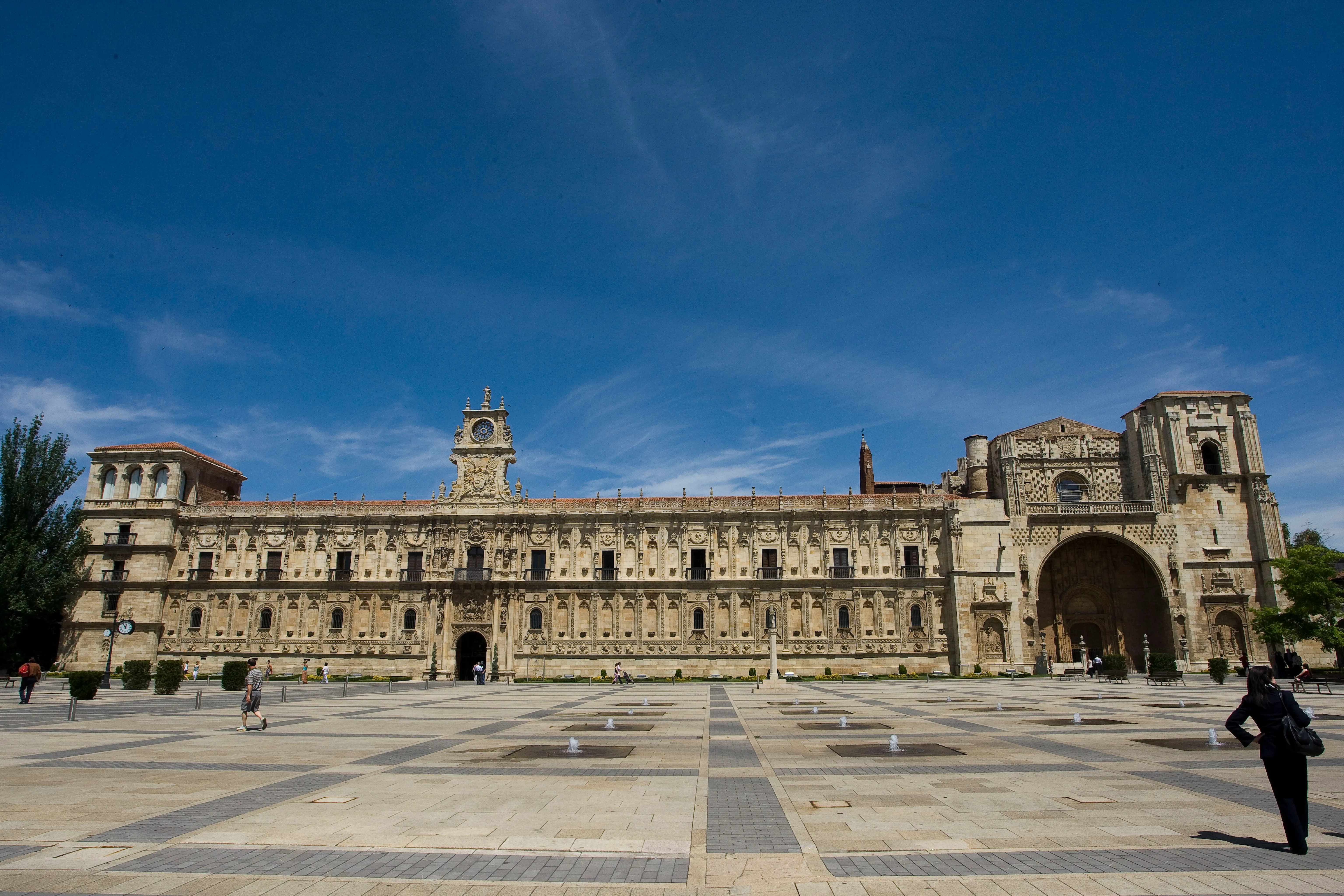
León combines one of Spain’s great Gothic cathedrals with the Romanesque royal complex of San Isidoro, Gaudí’s Casa Botines and the Barrio Húmedo. The Parador de León occupies the former San Marcos convent and pilgrim hospital, so the hotel itself is part of the visit. Two nights also provide a well-timed pause before the route climbs towards the Montes de León.
Astorga is smaller but particularly rewarding. Its Roman past, Cathedral, Gaudí’s Episcopal Palace and chocolate museum are difficult to see when arriving late and leaving the following morning. It is also a pleasant place to slow down before the ascent towards Foncebadón and the Cruz de Ferro.
Santo Domingo, Villafranca and Samos
Small Camino towns can justify a second night when they contain more than the walking schedule allows. Santo Domingo de la Calzada has two Paradors, a cathedral built around the saint’s tomb and the famous live cock and hen associated with the pilgrim miracle.
Villafranca del Bierzo is a good base for exploring Bierzo wine, as well as the Calle del Agua, castle and church of Santiago. A winery visit needs to be arranged around opening hours and transport; it should not be squeezed between two walking stages.
Samos is quieter and more contemplative. Its enormous Benedictine monastery has medieval origins, although fires and rebuilding have shaped what visitors see today. Guided visits follow the monastery’s own timetable. Staying an extra night makes it possible to see the cloisters and church without watching the clock. Samos lies on the Camino alternative from Triacastela to Sarria, so we build it into the walking route rather than treating it as an accidental detour.
Santiago de Compostela
Santiago is the clearest place for two or three nights. The arrival day is often consumed by the final walk, photographs, the Compostela and an emotional reunion with other pilgrims. A later day can be used for the Cathedral’s different official visits, the market, museums and a proper meal. At the Hostal dos Reis Católicos, it also gives time to notice the four cloisters, chapel and stonework that disappear during a hurried overnight stay.
Extra nights on the Portuguese Way
Porto and Viana do Castelo
Porto merits at least two nights before walking. The Cathedral marks the traditional departure, while the Ribeira, São Bento station and the port lodges across the Douro in Vila Nova de Gaia require time of their own. Travelers interested in wine can read our guide to Sandeman and Ferreira before choosing a visit.
On the Coastal Way, Viana do Castelo is an excellent smaller-city stop. The historic center, costume museum and Santa Luzia sanctuary offer far more than an arrival evening can hold. The funicular makes the hilltop visit practical on a rest day.
Ponte de Lima, Tui and Baiona
Ponte de Lima has the medieval bridge, riverside gardens and one of Portugal’s oldest town charters. It is compact, but a second night suits travelers who want a gentler rhythm or time to enjoy the town before the demanding stage towards Rubiães.
Tui’s fortified Cathedral and steep medieval streets deserve an unhurried visit. With two nights, travelers can also walk across the international bridge to Valença and explore its walled fortress without adding the excursion to a full Camino stage.
Baiona belongs to the coastal and Spiritual versions of the journey. The Parador occupies the Monterreal peninsula inside its defensive walls. A second night leaves time for the path around the fortress, the old town, the replica of the Pinta and a seafood lunch overlooking the bay. See how Baiona fits into the Paradors of the Portuguese Way.
Pontevedra and the Rías Baixas
Pontevedra’s traffic-free old town, museum and churches make it one of the easiest cities in which to spend a rest day. It is also the point where the Spiritual Variant separates from the Central Way, so an extra night can divide two distinct parts of the journey.
On the Spiritual route, Cambados is worth two nights for Albariño wineries, the old fishing quarter of Santo Tomé and the ruins of Santa Mariña Dozo. Quinta de San Amaro in Meaño offers a quieter country base. Both require the walking stages and transfers to be planned together; neither should be added as though it were directly beside every version of the route. Our guide to pazos and country hotels on the Portuguese Way explains the properties we use in this area.
Padrón and Santiago
Padrón is often treated only as the penultimate stop. An extra night allows visits to the Rosalía de Castro House-Museum, the Camilo José Cela Foundation in nearby Iria Flavia and the churches connected with the legend of Saint James’s arrival. A stay at Pazo de Lestrove can make this a historical stop rather than simply the night before Santiago.
Santiago deserves the same two- or three-night finish whichever Camino you follow. A central historic hotel gives immediate access to the Cathedral and old town; A Quinta da Auga offers gardens, spa facilities and a quieter final night outside the center. The right choice depends on whether the priority is being beside the Obradoiro or recovering away from its crowds.
Choosing where the extra night belongs
The best location is not always the most famous hotel. We look at the stages immediately before and after it, museum and monastery opening times, restaurant choices and whether a driver is needed. A secluded pazo can be wonderful when dinner and transport are arranged. The same property can feel inconvenient when guests discover too late that there is nowhere to walk for an evening meal.
Browse the options through our Luxury Camino Travel guide. We can add rest days to the Full French Way or our Portuguese journeys, then coordinate the hotels, luggage and transfers around them through Start Planning.